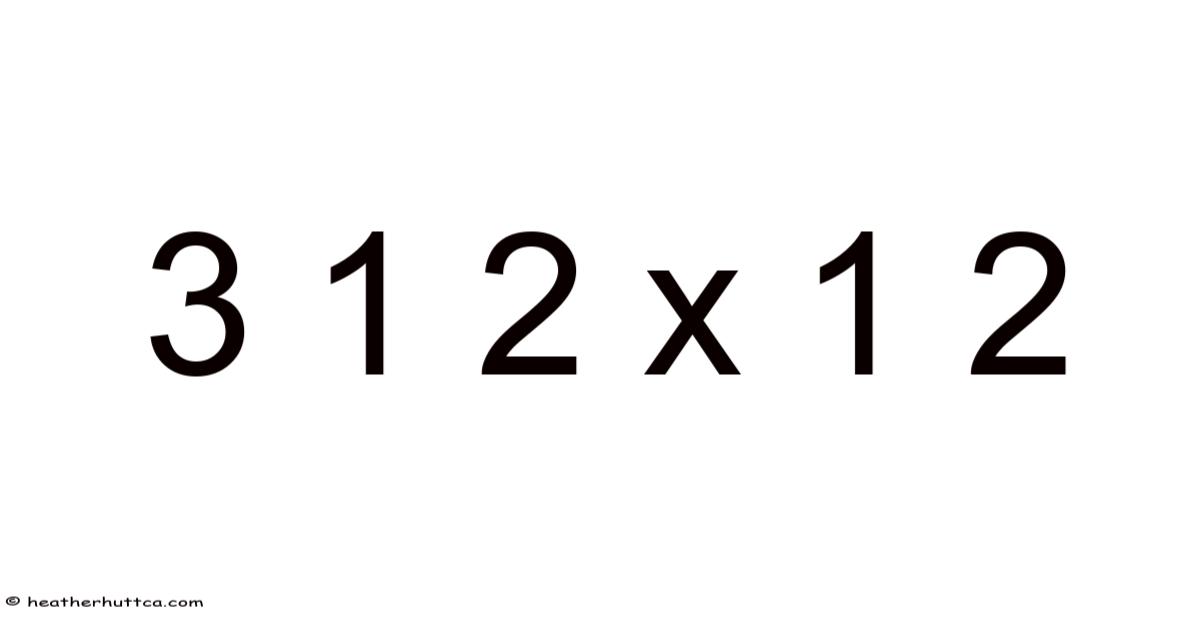
The concept of multiplication stands as one of the most foundational pillars of mathematics, weaving its layered patterns into the fabric of everyday life and academic pursuits. This article delves deeply into the mechanics, significance, and practical implementations of multiplication, exploring its role in both theoretical understanding and real-world utility. Now, the exploration here extends beyond mere calculation; it invites a deeper appreciation for how multiplication’s principles permeate various facets of human endeavor, from calculating budgets to analyzing data sets, thereby emphasizing its pervasive relevance. Because of that, at its core, multiplication serves as a bridge connecting disparate quantities, transforming simple additions and subtractions into scalable operations that underpin countless applications across disciplines. Now, whether navigating the complexities of finance, engineering, or natural sciences, the principle of multiplication remains indispensable, offering a universal language that simplifies problem-solving and fosters efficiency. Through systematic analysis, we uncover how this fundamental operation not only aids in computation but also cultivates critical thinking and precision, making it a cornerstone of intellectual development. Such a comprehensive examination ensures that readers grasp both the practicality and the profound implications of multiplication, solidifying its status as a indispensable tool in both personal and professional contexts That alone is useful..
Multiplication, often perceived as a straightforward operation, belies its complexity and versatility, requiring careful consideration of its foundational principles and applications. And at its simplest level, multiplication involves repeating a quantity a specified number of times, with one of those repetitions serving as the multiplicand and the other as the multiplier. Plus, this process, while elementary, demands precision to avoid errors that can cascade into significant consequences. Think about it: for instance, miscalculating the number of repetitions or misapplying the order of operations can lead to misinterpretations, underscoring the necessity of meticulous attention. Here's the thing — in educational settings, mastering multiplication is not merely about acquiring numerical proficiency but also about developing problem-solving skills that extend beyond arithmetic. That said, it teaches students to approach challenges methodically, breaking down problems into manageable components while maintaining consistency throughout their execution. Beyond that, multiplication’s role in scaling up or down quantities has a real impact in contexts ranging from scaling recipes to adjusting project timelines, illustrating its practical utility Simple as that..
Mathematical Foundations and Properties
Delving deeper into the mechanics of multiplication reveals several fundamental properties that govern its behavior. On the flip side, the commutative property asserts that the order of factors does not affect the product—(a \times b = b \times a)—which simplifies mental calculations and algebraic manipulations. The associative property ((a \times b) \times c = a \times (b \times c)) allows for flexible grouping of numbers, while the distributive property (a \times (b + c) = a \times b + a \times c) bridges multiplication and addition, forming the backbone of polynomial expansion and factoring Less friction, more output..
In more advanced mathematics, multiplication extends beyond integers to include fractions, decimals, negative numbers, and complex numbers. Matrix multiplication, for example, follows specific rules that differ from scalar multiplication, emphasizing the importance of dimension compatibility and non-commutativity in linear algebra. In abstract algebra, multiplication is generalized through binary operations in groups, rings, and fields, each with its own set of axioms and applications Turns out it matters..
Real-World Applications Across Industries
The practical implications of multiplication are vast and varied. In finance, compound interest calculations rely heavily on exponential growth models rooted in repeated multiplication. Think about it: engineering disciplines use multiplication to scale dimensions, calculate forces, and determine material requirements. In computer science, algorithms often involve multiplicative processes for tasks such as hashing, encryption, and data compression Worth keeping that in mind..
Scientific research frequently employs multiplication in statistical analysis, where researchers multiply probabilities to assess the likelihood of combined events. In medicine, dosages are calculated by multiplying base amounts by patient-specific factors like weight or age. These examples underscore how multiplication serves as a foundational tool that translates theoretical concepts into actionable solutions.
Educational Strategies and Cognitive Development
Teaching multiplication effectively requires a blend of conceptual understanding and procedural fluency. Here's the thing — visual representations such as arrays and area models help students grasp the underlying principles before moving to abstract symbolic manipulation. Technology-enhanced learning tools now offer interactive simulations that make multiplication tangible and engaging for learners of all ages.
Cognitively, mastering multiplication enhances working memory and pattern recognition skills. Students who develop automaticity in multiplication facts free up mental resources for higher-order thinking tasks, enabling them to tackle complex problems with greater ease and confidence.
Conclusion
Multiplication stands as more than a basic arithmetic operation; it is a gateway to advanced mathematical thinking and practical problem-solving. Its properties provide a framework for understanding more complex mathematical structures, while its applications permeate virtually every field of study and professional practice. Because of that, by fostering both computational accuracy and conceptual depth, multiplication continues to play an essential role in education, research, and everyday decision-making. As we advance into an increasingly data-driven world, the ability to multiply effectively—both literally and metaphorically—remains a critical skill that empowers individuals to figure out complexity with precision and confidence.
Future Directions and Emerging Applications
As we look toward the future, multiplication continues to evolve alongside technological advancement. Think about it: in quantum computing, quantum gates operate on principles that extend classical multiplication into multidimensional state spaces, where operations occur simultaneously across superpositions of values. Machine learning algorithms put to work matrix multiplication at unprecedented scales, enabling neural networks to process vast datasets and identify patterns that would be impossible to detect through traditional methods That alone is useful..
The rise of big data analytics has elevated multiplication from a basic computational tool to a cornerstone of modern statistical modeling. Techniques such as principal component analysis, regression models, and clustering algorithms all depend fundamentally on multiplicative transformations of data matrices. Similarly, blockchain technologies put to use modular multiplication in cryptographic protocols that secure digital transactions across global networks.
Global Perspectives and Cultural Significance
Different cultures have developed unique approaches to understanding and teaching multiplication, reflecting diverse mathematical traditions and cognitive preferences. The lattice method popular in Vedic mathematics, the line multiplication techniques found in various Asian cultures, and the grid-based approaches used in Western education all demonstrate that while the underlying mathematical principles remain constant, human creativity in conceptualizing these operations knows no bounds But it adds up..
International educational standards increasingly make clear the importance of multiplicative reasoning as a predictor of success in STEM fields. Countries that prioritize early mastery of multiplication concepts through innovative pedagogical approaches consistently show stronger performance in mathematics literacy assessments, highlighting the operation's continued relevance in global competitiveness.
You'll probably want to bookmark this section.
Conclusion
Multiplication transcends its humble beginnings as repeated addition to become a fundamental pillar supporting the edifice of modern mathematics and its applications. Practically speaking, from the earliest civilizations' tally marks to today's quantum algorithms, this operation has continuously adapted to meet humanity's growing computational needs. Its elegant properties—commutativity, associativity, and distributivity—form the backbone of algebraic structures that model everything from planetary motion to economic systems.
As we advance further into the digital age, multiplication's role becomes ever more critical, powering the algorithms that drive artificial intelligence, securing our communications through cryptographic protocols, and enabling scientific breakthroughs through sophisticated modeling techniques. The investment in quality mathematical education, particularly in building strong foundational skills in multiplication, pays dividends that extend far beyond the classroom, equipping individuals with the analytical tools necessary to thrive in an increasingly complex world Not complicated — just consistent. Took long enough..
Understanding multiplication deeply—not merely as calculation but as a way of thinking about scaling, growth, and relationships—remains essential for informed citizenship, scientific literacy, and economic participation in the 21st century. Whether calculating medication doses, analyzing statistical trends, or simply splitting a restaurant bill, our ability to multiply effectively reflects and reinforces our capacity to engage meaningfully with the quantitative aspects of modern life.
